
Saying that Murano glass is a thousand-year-old art is now rhetoric, any article or website that sells Murano glass objects will tell you the story in detail.
What interests us most at this moment is the future of artistic glass production at the dawn of 2025.
An art born in antiquity that has actually changed very little in its creation and this is where the beauty and mystery lies.
Many designers have tried, some successfully and others not, to reinvent this art with new shapes and colors, but the chemical and structuring principle remains and will remain the same.
The problem remains right here: is it still a sustainable production in terms of structures, personnel and raw materials?
This is the challenge that is proposed in this delicate period.
Making glass, but above all making glass in Venice is not easy. And that is why in ancient times the Republic of Venice moved the glassworks to Murano for safety.
Making glass today in Murano has become a difficult challenge: whether due to the complexity of transport, whether due to the structure of the island itself and therefore the spaces, but above all due to the costs of energy (gas) to keep the furnaces lit.
According to a survey by the Institute for Labour, in the last thirty years or so (from 1996 to 2022) of the 266 glass companies existing in the area, with almost 2 thousand workers, between 60 and 70 have remained, with approximately 650 employees.
An alarming figure, which demonstrates the fragility of this sector which nevertheless remains a heritage to be preserved.
Not only does the problem of the furnace remain, but also of those who create the glass with their own hands: the Murano Glass master.
This mythical figure who has carried his experience from generation to generation is losing more and more followers.
In fact, no one wants to learn this refined art anymore: the work is hard, sometimes the temperatures in the furnace are more than 50 degrees and to become a master it takes hours and hours of practice and study.
Perhaps today’s young people no longer want to learn a physical trade, perhaps because the long and tiring apprenticeship does not immediately show its immense value, the fact is that there are fewer and fewer master glassmakers in Murano.
An art therefore destined to be lost among the waves of the lagoon if we don’t do something soon, such as state-subsidized schools and apprenticeships.
We have realised, every global problem has an impact on the economy and the cost of energy, and I’ll tell you just a little fact to understand the enormous cost of glass production:
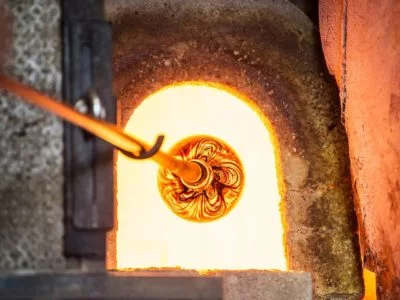
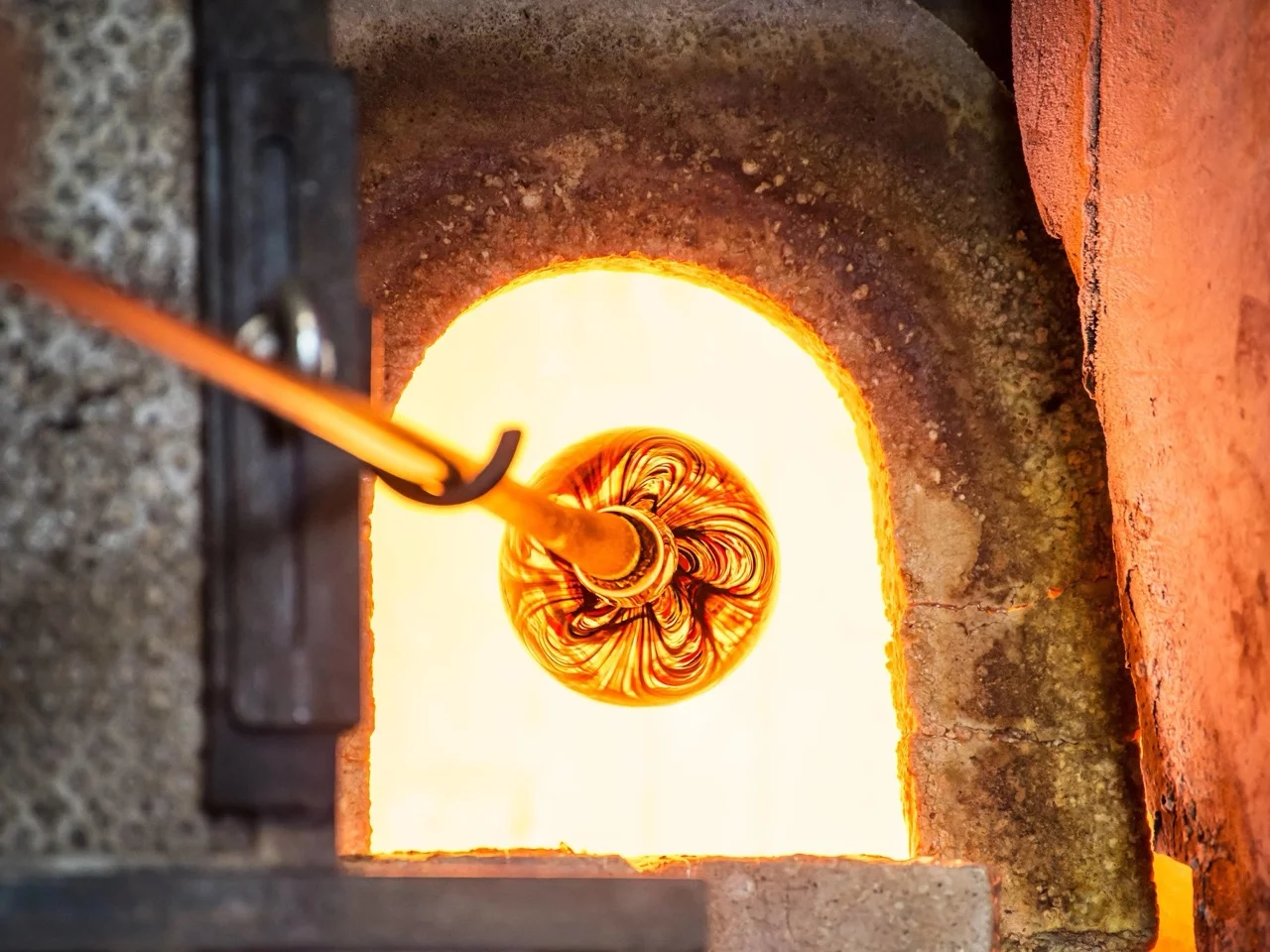
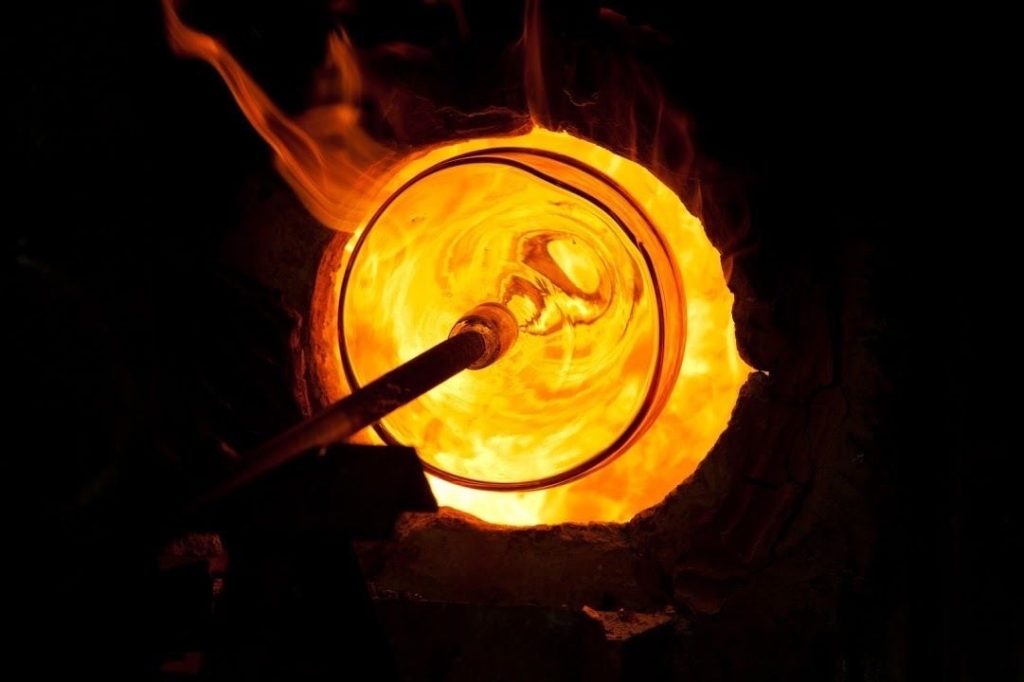
The Murano glass-blowing district consumes something like 10-12 million cubic meters of gas per year. And the reason is simple: the furnaces work day and night, 24 hours a day, and can never be turned off.
Furthermore, some specific processes, such as gold and silver leaf or the use of some chemical reagents to obtain special color effects, require expensive raw materials.
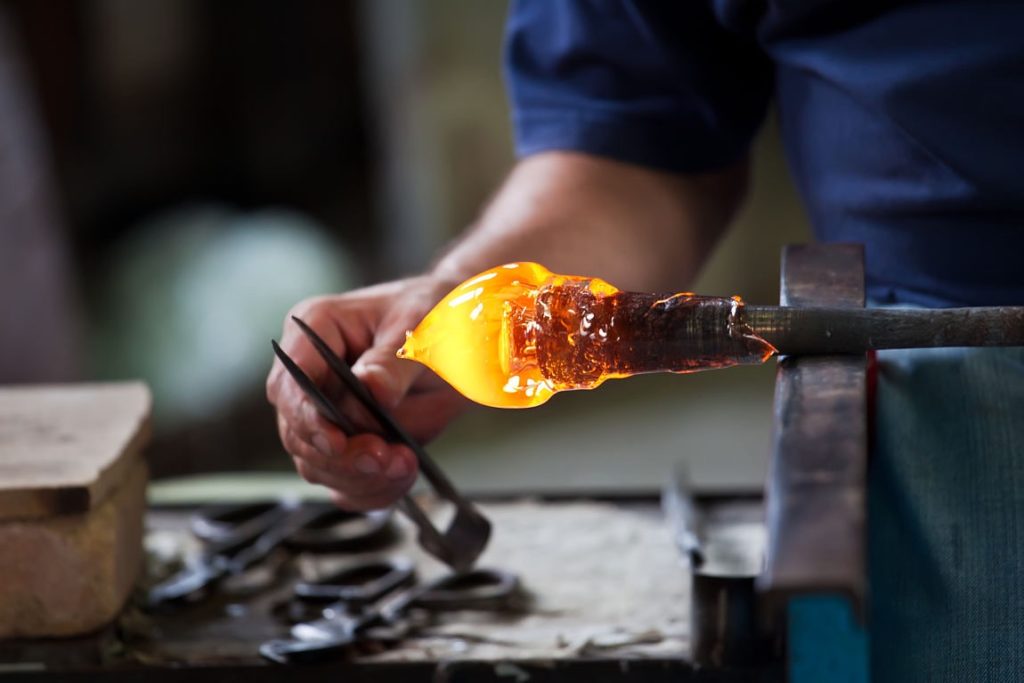
Once all the critical issues of this sector have been clarified, it is essential to keep this unique art alive.
An art that began with the Phoenicians and then passed on to the Romans to evolve on the island of Murano.
Consider that the Republic of Venice was so jealous of its master glassmakers that it actually didn’t let them leave the island for fear they might reveal the secrets of Murano glass!
They had developed techniques of casting, color and shape that were absolutely not to be revealed to the outside world.
It therefore becomes essential to reflect on the importance of preserving by any means this immense cultural value that has seen many eras pass.
One of the effects of this “crisis” is undoubtedly the value that Murano glass is taking on: it is becoming a truly rare work to collect.
We certainly have hundreds of examples of how vases by, let’s mention some well-known masters, Venini or Barovier have acquired an amazing value over time.
It becomes a real investment of certain value. A vase from the 1970s has increased its value fivefold today, so from a profit perspective, a work by a famous master today could acquire considerable value in a few years.
I must reveal a secret to you: it is not easy to bring a Murano glass factory online.
The master glassmaker is jealous of his secrets and simply showing one of his chandeliers or vases on a site means for him that it has been burned: that it has been fed to imitators who produce low-cost glass elsewhere in the world.
So they are not so keen on sites that advertise Murano glass online.
However, it remains the only way for artistic glass factories to survive, because the online sale of Murano glass has now reached considerable figures.
Making glass factories aware of the immense potential of the Internet is one of the challenges of this decade, and it is the only way out.
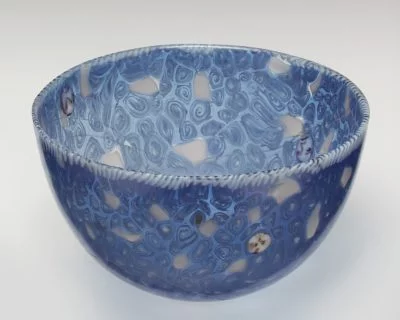
Some glass factories are globalising, in the sense that they are able to expertly mix tradition and new design, proposing reinterpretations of traditional art with the new forms of modern design, trying to attract new audiences who do not stop at the simple vase with murrina.
The invitation of this article is therefore to support this art more than ever, trying to purchase exclusively original Murano glass.
This can be recognized by the hallmark.
Furthermore, it is necessary to verify the authenticity and guarantee of the websites where Murano glass is purchased.
Precisely because it is a work of art, in some way there is a need to support this activity, also by future generations: it is important to talk about it, to make it known, to show the beauty and uniqueness of the original Murano glass , including promoting documentaries, workshops, events and innovative markets.

Enter your details below to save your shopping cart for later. And, who knows, maybe we will even send you a sweet discount code :)